In the Motor Cooling System, the Influence and Control of the Fan On the Motor Cooling Effect!
Sep 20, 2021
The fan is an important wind pressure component of the motor ventilation and heat dissipation system. It compensates for the wind pressure loss when the cooling medium passes through the air path, and transports a certain flow of cooling medium to the heating part of the motor, takes away the heat and transfers it to the next-level cooling medium.
Usually, the fan installed in the inner cavity of the motor is called the inner fan, and the fan placed outside the motor housing is called the outer fan. Whether it is an inner fan or an outer fan, it is fixed on the rotor of the motor and rotates with the rotor.
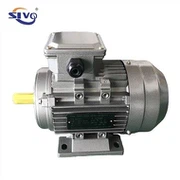
For small and medium-sized motors, the heat dissipation mainly depends on the wind pressure generated by the external fan and the diversion of the air hood. The heat generated by the motor is brought to the surrounding environment by the cooling medium air blowing on the surface of the casing. Generally, an external fan is installed on the non-shaft extension end of the motor, and an external ventilation and heat dissipation system is formed with the fan cover and the heat dissipation ribs of the base to ensure that a certain flow of cooling medium air flows through the surface of the shell to take away enough heat, so that the internal heating body can reach the shell. A relatively stable temperature field is formed from the surface of the body, the shell to the surrounding environment, and the maximum temperature of the temperature field in the shell is not higher than the design allowable value.
It is emphasized here that the motor fan must match the area of the air inlet of the motor hood and the maximum diameter of the air outlet. Especially for high-efficiency motors, the shape and size of each ventilation section in the ventilation path formed by the hood and the outer surface of the motor housing must be optimized. Optimum cooling with minimal wind friction.
For large and medium-sized motors, the internal air duct structure is complex, which is likely to cause local heat accumulation. Therefore, most iron cores have axial and radial ventilation channels, and an internal fan is installed at one or both ends of the motor rotor, so that the internal cooling medium air can form an independent circulation system along a reasonable path. The inner fan installed at both ends is suitable for radial ventilation structure motors; the inner fan at one end is used for axial and mixed ventilation structure motors.
As the wind pressure component of the motor ventilation and heat dissipation system, the fan and the iron core and winding of the motor constitute an independent ventilation and heat dissipation system that drives the internal cooling medium air and circulates along the design preset path. For example, there are at least three iron core sections in the motor iron core of radial ventilation cooling structure, and ventilation grooves are formed between adjacent iron core sections to form ventilation grooves. It can improve the balance of air flow flowing through multiple ventilation channels, so that the temperature of the coil and multiple iron core sections is basically evenly distributed along the axial direction of the motor. Compared with the solid structure, the maximum temperature value in the temperature field is significantly reduced without changing the total flow of the wind, effectively avoiding failures caused by excessive local temperature rise.
The axial ventilation is divided into two types: full axial ventilation or semi-axial ventilation, that is, the cooling medium air flows into the axial hole punched on the iron core punch from one end and flows out from the other end, or the gas flows into the iron core axial hole from both ends respectively. , and then discharged through the radial air duct in the middle. How to choose according to the internal structure characteristics is the key to reducing the temperature rise of the motor and improving the technical performance and economic level of the motor.
The built-in fan on the shaft is only suitable for the motor running at power frequency. For the variable frequency motor, the difference between the high and low speed of the motor is very large, especially when the motor is running at low speed. Improve the cooling conditions of the motor by installing and operating fans independently.