Basic Principles of Single-Phase Motors
Mar 30, 2023
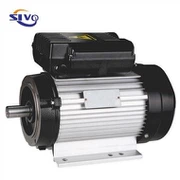
Single-phase motors generally refer to small power single-phase asynchronous motors powered by single-phase AC power (AC220V). This type of motor usually has a two-phase winding on the stator and a common squirrel cage rotor. The distribution of two phase windings on the stator and the different power supply conditions can produce different starting and operating characteristics.
Generally, according to the characteristics of the starting and operating modes of motors, single-phase asynchronous motors are divided into five types: single-phase resistance starting asynchronous motors, single-phase capacitance starting asynchronous motors, single-phase capacitance running asynchronous motors, single-phase capacitance starting and operating asynchronous motors, and single-phase shaded pole asynchronous motors.
When a single-phase sinusoidal current passes through the stator winding, the motor will generate an alternating magnetic field. The strength and direction of this magnetic field vary sinusoidally with time, but it is fixed in spatial orientation, so it is also called an alternating pulsating magnetic field. This alternating pulsating magnetic field can be decomposed into two rotating magnetic fields with the same rotational speed and opposite rotating directions. When the rotor is stationary, these two rotating magnetic fields generate two equally sized and opposite directions of torque in the rotor, making the resultant torque zero, so the motor cannot rotate. When we use an external force to rotate the motor in a certain direction (such as clockwise rotation), the movement of the cutting magnetic line between the rotor and the rotating magnetic field in the clockwise rotation direction becomes smaller; The cutting magnetic line movement between the rotor and the rotating magnetic field in the counterclockwise rotation direction becomes larger. In this way, the balance is broken, and the total electromagnetic torque generated by the rotor will no longer be zero, and the rotor will rotate in the direction of propulsion.
To enable a single-phase motor to rotate automatically, we can add a starting winding to the stator, which differs by 90 degrees in space from the main winding. The starting winding should be connected in series with a suitable capacitor to make the current of the main winding approximately differ by 90 degrees in phase, which is known as the phase separation principle.
In this way, two currents that differ by 90 degrees in time are fed into two windings that differ by 90 degrees in space, which will generate a (two-phase) rotating magnetic field in space. Under the action of this rotating magnetic field, the rotor can automatically start. After starting, when the rotational speed rises to a certain level, the starting winding is disconnected by means of a centrifugal switch or other automatic control device installed on the rotor. During normal operation, only the main winding operates. Therefore, the starting winding can be made to operate in a short time manner. However, there are many times when the winding is started and kept open. We call this type of motor a single-phase motor. To change the direction of rotation of this type of motor, it is only necessary to change the terminal of the auxiliary winding.