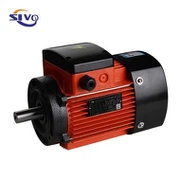
Different Components of Different Types of Motors
Jun 01, 2023
Different types of motors have different components, but the above are the most basic components. For example, DC motors also require the use of carbon brushes and commutators; AC motors may include additional devices on the stator and rotor, such as capacitors and starting resistors.
Brushed motor is a type of DC motor that controls motor rotation by transmitting current through contact between the brush and the rotating part (rotor) of the motor. The main components of a brush motor include the stator, rotor, brushes, and motor casing.
In a brushless motor, the stator is a stationary part, usually composed of an iron core and copper wire winding, used to generate a magnetic field. The rotor is a rotating part, usually composed of a permanent magnet and an electric motor shaft. When rotating, it is subjected to the action of the stator magnetic field and generates torque.
The brush is connected to the contact point of the external power supply of the motor through a spring. When the current passes through the brush, it will be transmitted to the rotor, generating rotational force.
Brushed motors have the advantages of simple structure, low price, and easy speed control, but they also have some drawbacks, such as easy damage to brushes, short lifespan, and high noise. With the development of technology, brushless motors have gradually replaced brushless motors as a more advanced motor technology.
Brushless DC motor (BLDC motor) is an AC motor, also known as Electronic Commutation Motor (ECM). Unlike brushless motors, brushless motors are electronically controlled for commutation without the need for brushes. Due to the use of electronic control, brushless motors have higher efficiency and longer lifespan.
Brushless motors are usually powered and controlled by external electronic controllers to control the speed and direction of the motor. Usually, the rotor of a motor is composed of permanent magnets, while the stator is composed of coils. When a current is applied to the stator coil, it will produce a rotating magnetic field, which will cause the motor rotor to rotate.
In brushless motors, the controller uses sensors to detect the rotor position of the motor and determine when to change the direction of the current to maintain the motor's rotation. These sensors can be Hall sensors or inductive sensors. Due to the lack of brushes in brushless motors, brush wear and sparks can be avoided, resulting in higher reliability and lifespan of the motor.
Brushless motors have many applications, including industrial machinery, household appliances, aerospace, automobiles, and drones.
Our main products are Single Phase Induction Motor,Permanent Magnet Electric Motor ,Three-phase PMSM Motor,The Electric Furnace Blower Motor ,Radiator Fan Motor,Indoor Blower Motor ,Well Pump Motor,Vacuum Pump Motor ,Water Pump Motor,Synchronous Motor,Single Phase PMSM Motor.