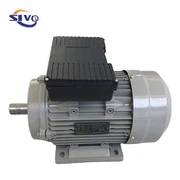
What Is High Efficiency Motor
May 12, 2022
A high-efficiency motor refers to a motor with high efficiency, and its efficiency should meet the relevant energy efficiency class requirements.
High-efficiency motors take measures from design, materials, and processes, such as adopting reasonable stator and rotor slot numbers, fan parameters, and sinusoidal windings to reduce losses, and the efficiency can be increased by 2% to 8%, with an average increase of 4%. From the perspective of saving energy and protecting the environment, high-efficiency motors are the current international development trend. The United States, Canada, and Europe have successively promulgated relevant regulations. According to the running time of the electric motor, the CEMEP standard formulated in Europe divides the efficiency into three levels: eff1 (highest), eff2, and eff3 (lowest), which will be implemented step by step from 2003 to 2006. The latest IEC 60034-30 standard divides motor efficiency into four levels: IE1 (corresponding to eff2), IE2 (corresponding to eff1), IE3, and IE4 (the highest). my country promises to implement IE2 and above standards from July 1, 2011.
Features of high-efficiency motors
(1) High efficiency, IE2 is 3% higher than IE1 on average, and IE3 is about 5% higher than IE1 on average.
(2) Need to use more high-quality materials. The cost of IE2 is 25% to 30% higher than that of IE1 motor, and the cost of IE3 is about 40% to 60% higher than that of IE1 motor.
(3) Due to the lower operating temperature, the motor has a longer life and can reduce maintenance costs.
(4) The starting current is larger in typical design situations.
(5) The rotor inertia is large.
(6) Under the rated load, the speed is higher and the slip rate is smaller.